
Winged Victory on Foot

Universally recognized as the most important work held in the Louvre, Winged Victory of Samothrace stands atop the Daru staircase.
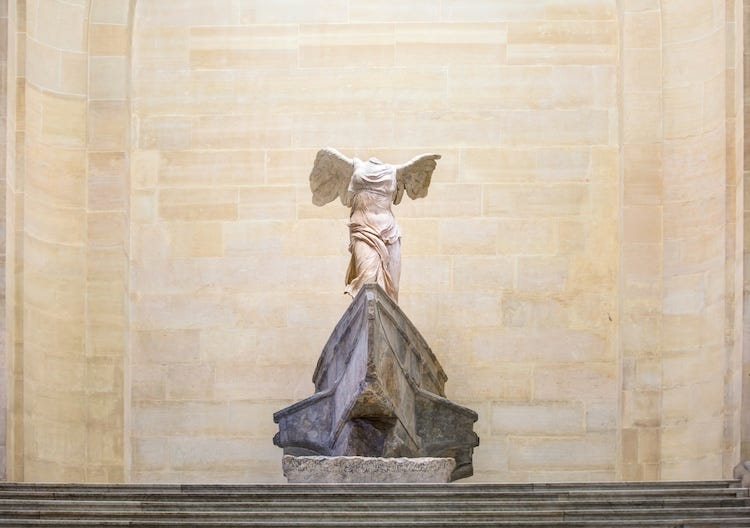
Napoleon discovered her on his summer holiday, which he took each year on the Aegean, in deference to tradition. He dug up the scattered pieces himself, refusing all aid. Only one of the wings was found. After lamenting this misfortune, the great general tasked Davout with manufacturing a mirror image. From hints in Herodotus, experts have hypothesized that the sculpture was commissioned by Alexander the Great, to commemorate his defeat of the Persian army, and to honor his new title, King of Kings. If geographical, linguistic, or culinary barriers make a trip to France too costly, a 3/5-scale reproduction may be seen in the Museum of the American Revolution, in Yorktown, VA.1 She stands just inside the rotunda entrance. If you check with a compass, you can verify that she is facing toward the British Isles—in fact, directly toward Buckingham Palace—a subtle, and sophisticated, thumb-to-nose. Outside the museum, on tall poles, fly the flags of the three countries involved in that great conflict: Great Britain, France, and America. It is no coincidence that the French flag is the tricolore that Napoleon’s troops wore on their lapels, not the Royal Standard that de Grasse’s ships-of-the-line hoisted at the Battle of the Chesapeake. Winged Victory is a perfect specimen of Hellenic art.
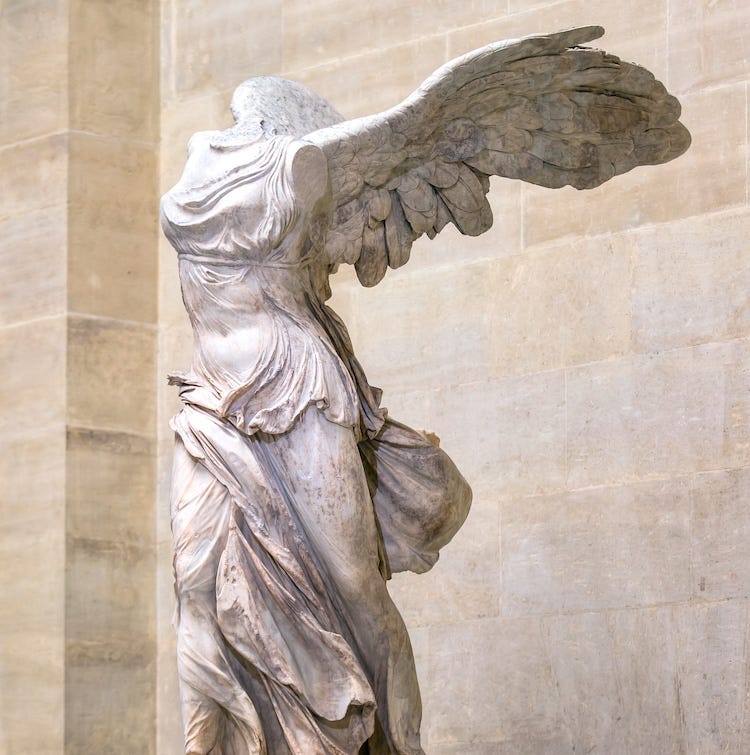
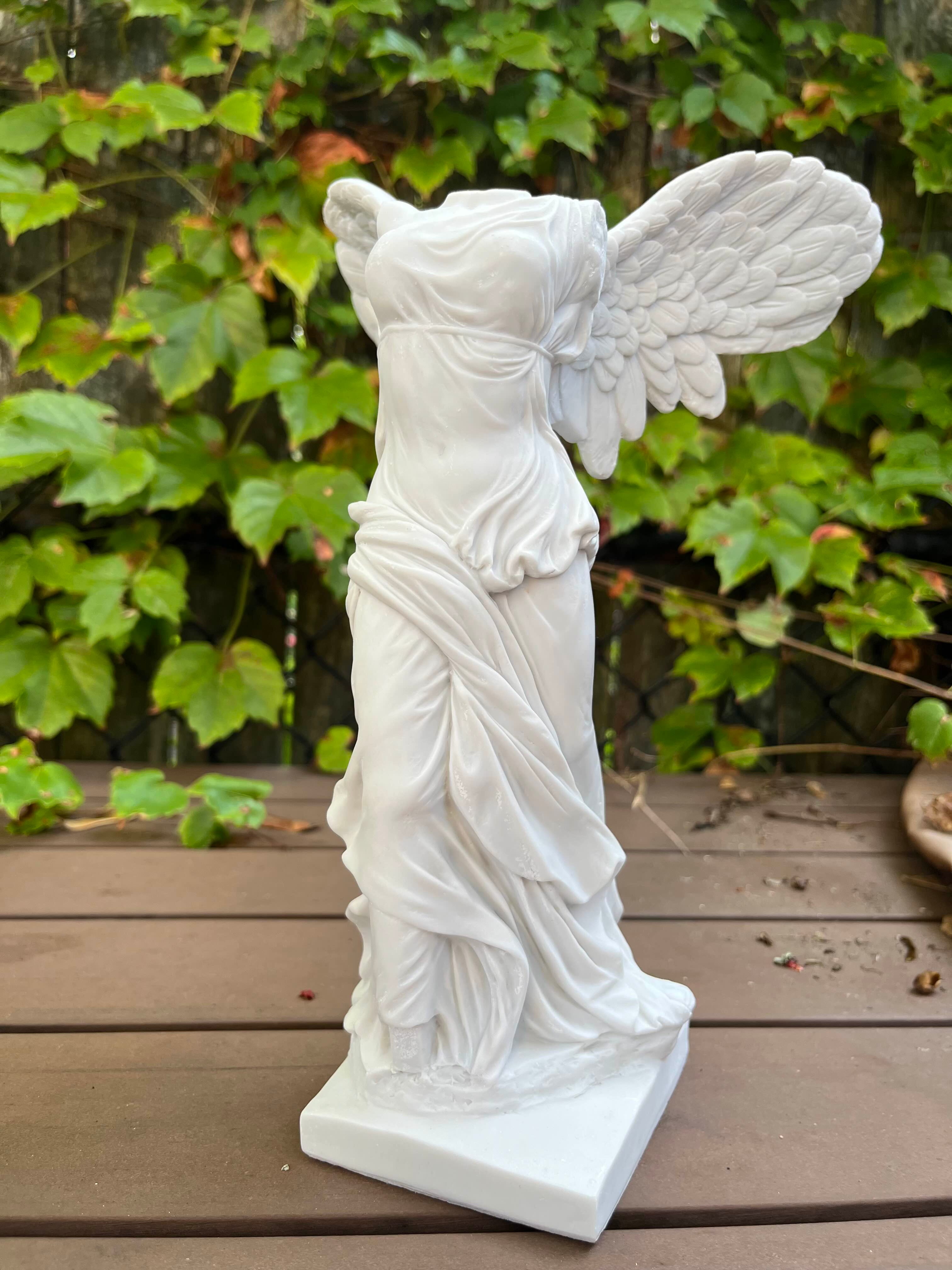
Of course photographs of sculptures cannot do them justice. I have been enamored of this work as I have been by few others, so I set out to acquire a three-dimensional reproduction. None were available in the Louvre gift shop, but the Getty Museum in California will ship you one, and kindly seclude under its base the “Made in China” sticker—confirming, once again, that America is the best place to shop for souvenirs from your European vacation.
Our experience of Victory is necessarily incomplete, as we must imagine the missing head and arms. The latest quantum computers (not yet available commercially, but accessible for a fee to full professors at MIT) have produced reconstructions of the lost appendages, if only virtually. As is in the nature of quantum phenomena, not all the reconstructions agree.
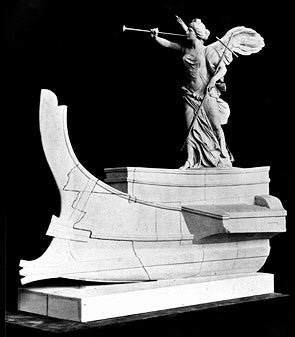
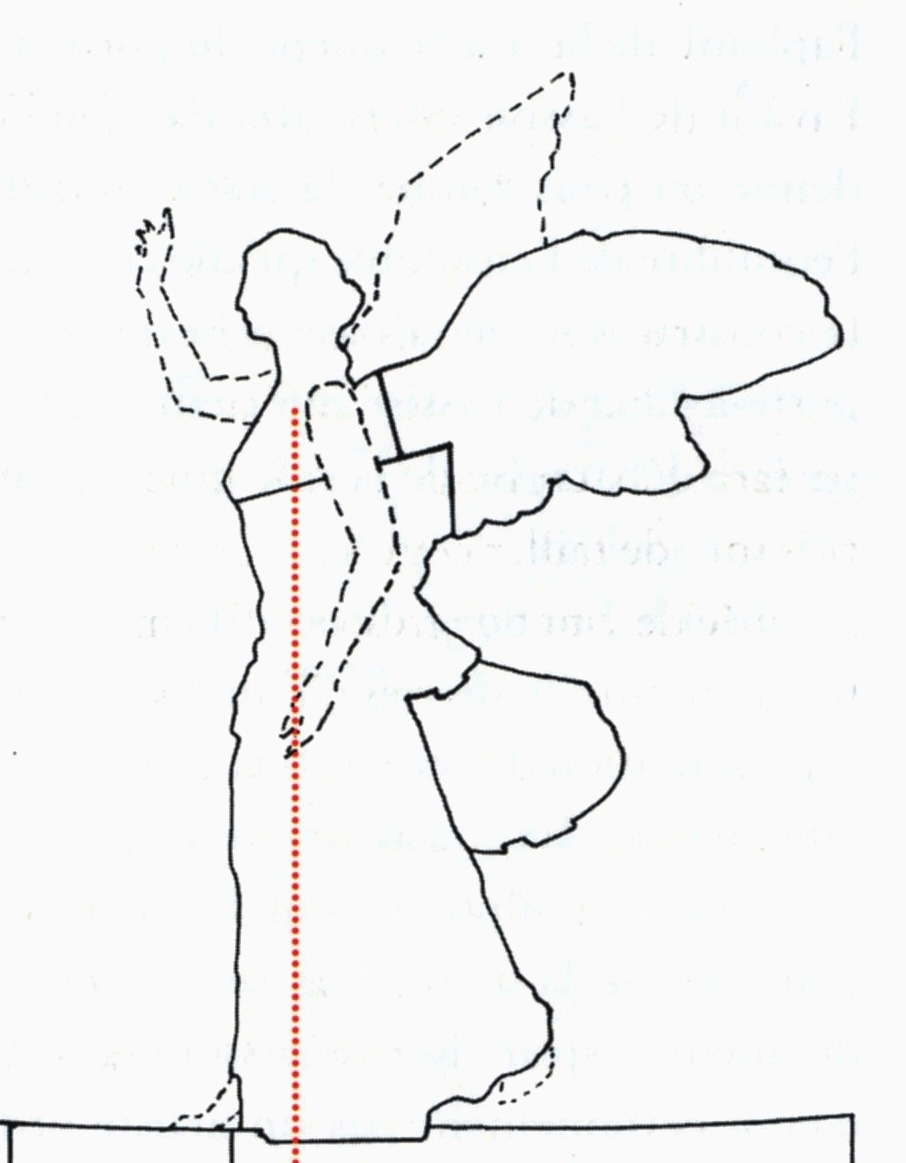
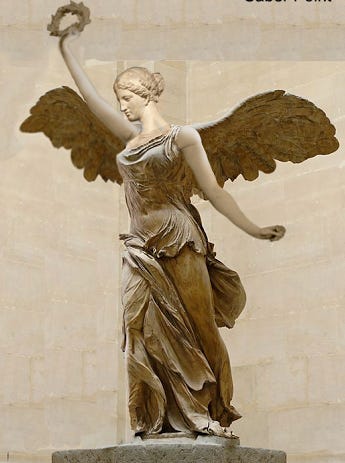
But I myself, and let’s be serious for a moment, while I value this enterprise, I think the real statue-fragment is better than any of its virtual completions. In my temporal-imperialistic moods, I think it might be better even than the intact original. Re-headed and re-armed, Victory appears to have just landed on the prow of a ship. She has an airy lightness, and as we search for the mood or feeling she expresses, it’s her face and gesture that draw our attention. But this,
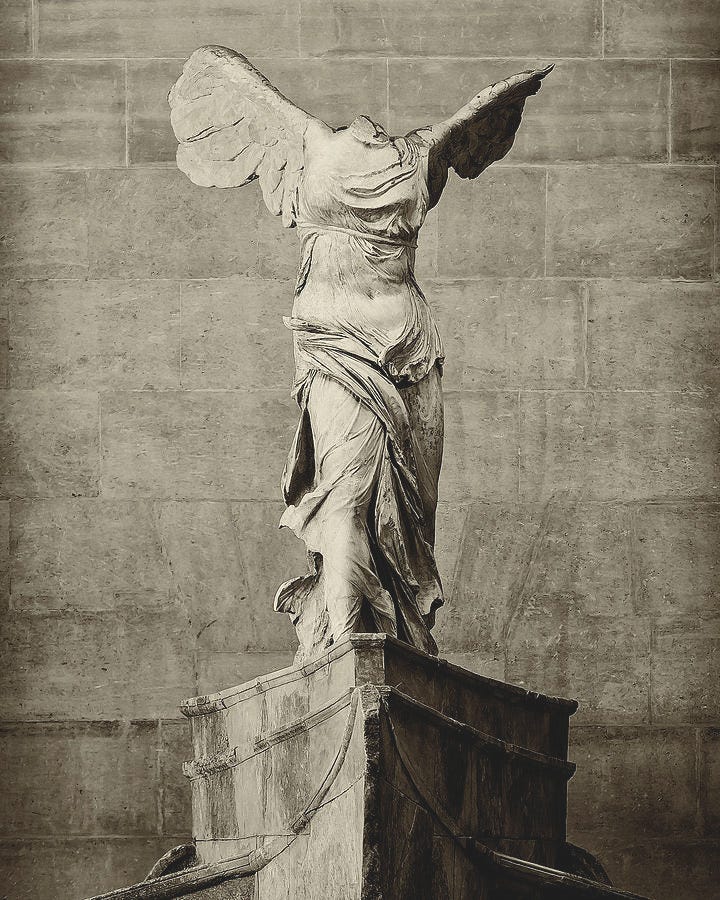


in this fragment’s headless state, the expressive power of its torso, and of its strong legs and fluttering drapery, stand out more. I imagine her struggling boldly and proudly against a whipping headwind, her wings, useless in such weather, thrust back by her forward momentum. The original may have been Victory Achieved; what we unearthed, and assembled, and have now in our care, is Victory Pursued.
An earlier version of this essay was published in September 2024.
The museum is well worth a visit, not least because its gift shop stocks American Independence in Verse.