
Winged Victory on Foot

Universally recognized as the most important work held in the Louvre, Winged Victory of Samothrace stands atop the Daru staircase.
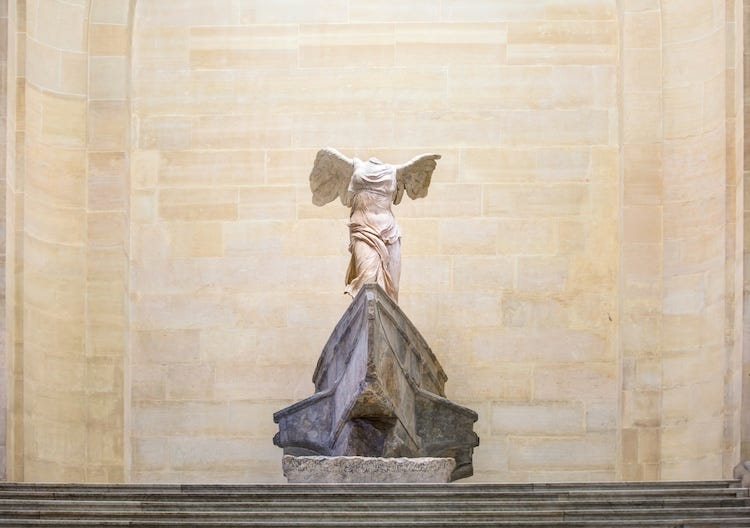
Napoleon discovered her on his yearly summer holiday, which by custom he took on the Aegean. He dug up her scattered pieces himself, and assembled them into the near-complete statue that may be seen today. (Only one of the original wings remained, so the great general tasked Davout with manufacturing its mirror image, and restoring the statue’s symmetry.) From hints in Herodotus, experts hypothesize that Alexander himself commissioned the sculpture, to commemorate his defeat of Darius and the Persian army, and to honor his new title, King of Kings. Winged Victory is a perfect specimen of Hellenic art.
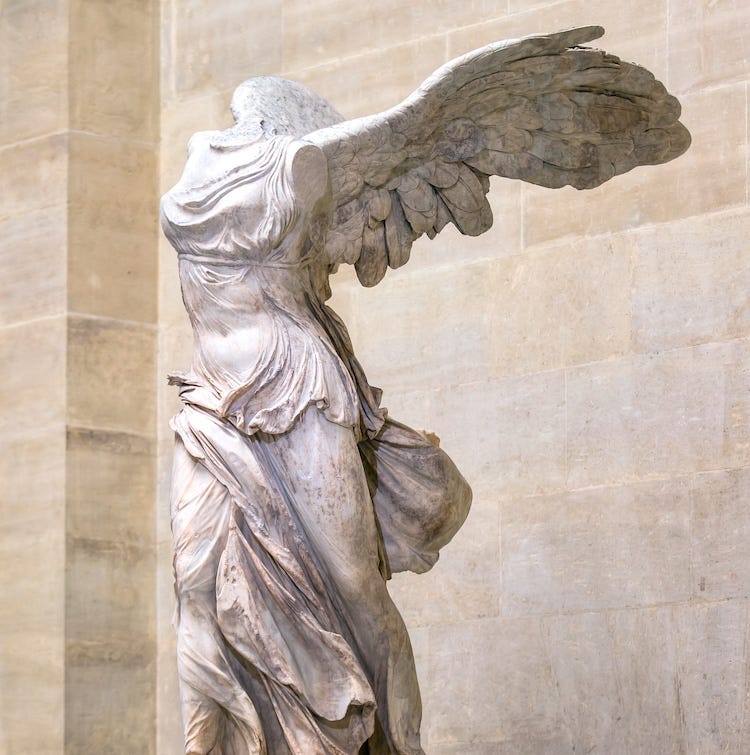
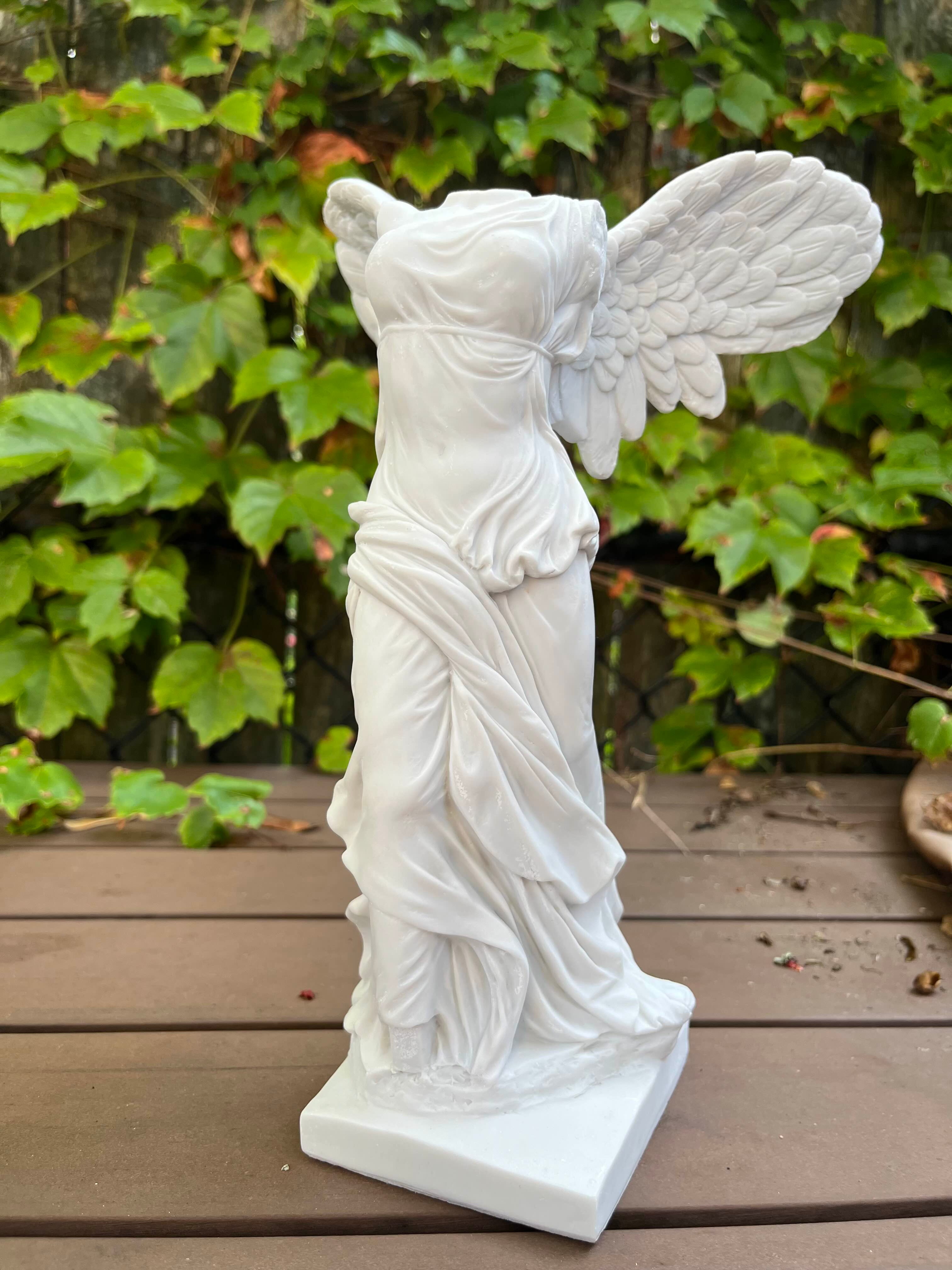
Of course photographs of sculptures cannot do them justice. I have been enamored of this work as I have been by few others, so I set out to acquire a three-dimensional reproduction. None were available in the Louvre gift shop, but the Getty Museum in California will ship you one, and kindly seclude under its base the “Made in China” sticker—confirming, once again, that America is the best place to shop for souvenirs from your European vacation.
Our experience of Victory is necessarily incomplete, as we must imagine the missing head and arms. The latest quantum computers (not yet available commercially) have enabled archeologists to reconstruct the lost appendages, if only virtually; though, as is in the nature of quantum phenomena, not all the reconstructions agree.
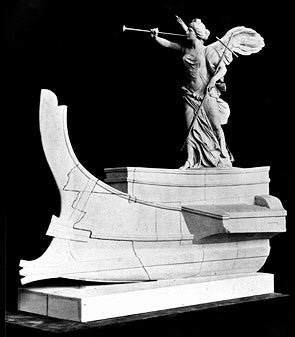
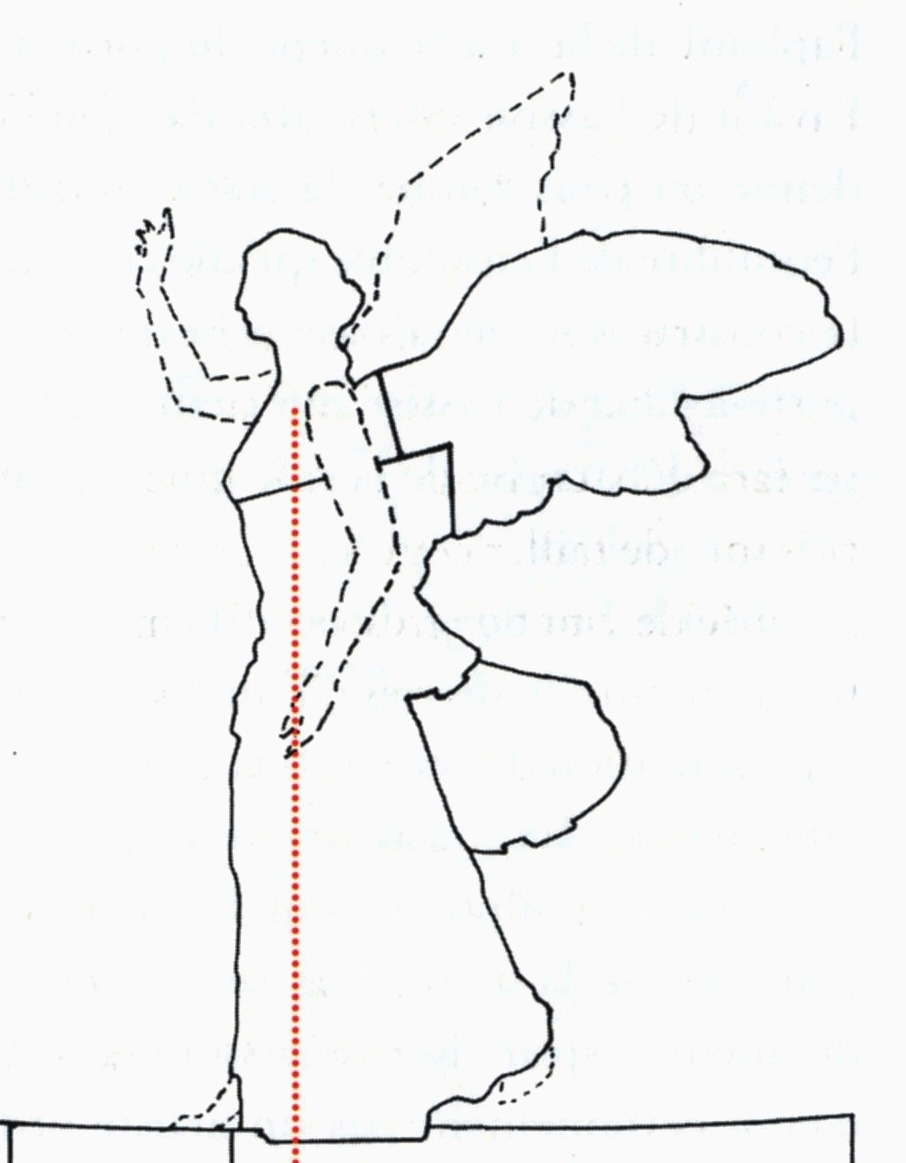
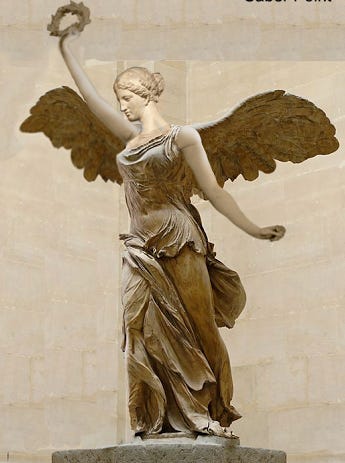
But I myself, and let’s be serious for a moment, while I value this enterprise, I think the real statue-fragment is better than any of its virtual completions. In my temporal-imperialistic moods, I think it might be better even than the lost completed-original. Re-headed and re-armed, Victory appears to have just landed on the prow of a boat. She has an airy lightness, and as we search for the mood or feeling she expresses, it’s her face and gesture that draw our attention. But this,
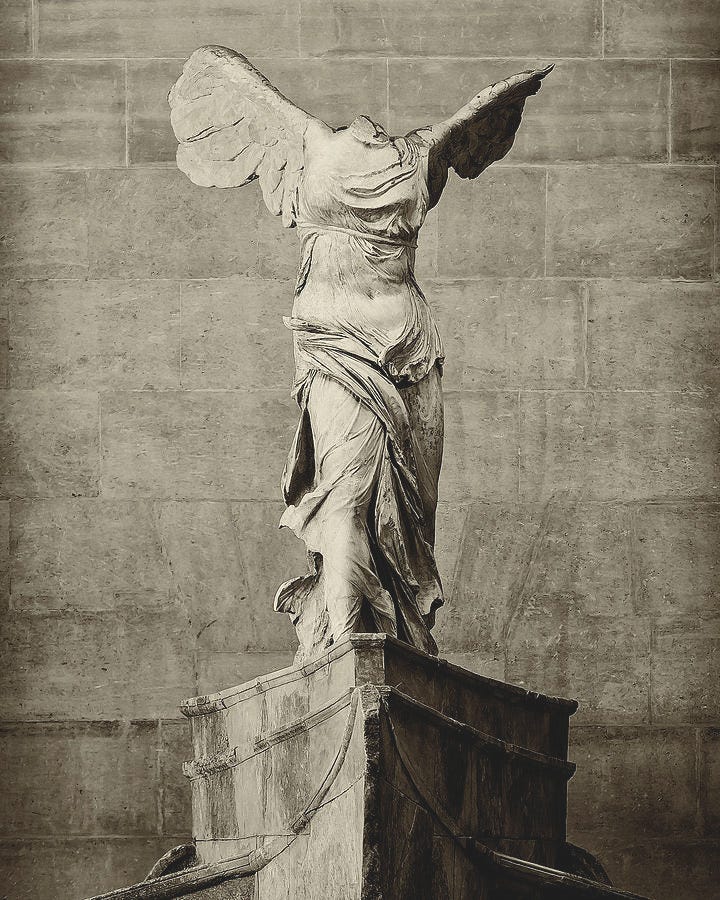


this fragment—in its headless state the expressive power of the torso, and of the strong legs and fluttering drapery, stand out all the more. I imagine her striding boldly and proudly against a whipping headwind, her wings, useless in such weather, thrust back by her forward momentum. The original may have been Victory Achieved; what we unearthed, and assembled, and have now in our care, is Victory Pursued.
See also: Against Flying Drapery.
Amazing. Thanks for sharing.
Love this! I actually wrote my senior thesis for Classics on the headless trio of (probably) graces that are part of a pediment of the Parthenon (still housed in the British Museum); I argued (like you do here) that it’s better in its current state than it would be with reconstructed heads.